


Tag Archives: K-12 education

Legislature unanimously approves supplemental capital budget

The Legislature tonight unanimously passed the 2025-27 state supplemental capital budget  following an agreement earlier this week by Senate and House negotiators on a final budget plan.  The Senate voted 49-0 to pass the budget after the House approved it 96-0.

Two eastern Washington Republican senators who helped develop the spending plan applauded it for addressing needs on both sides of the Cascades.

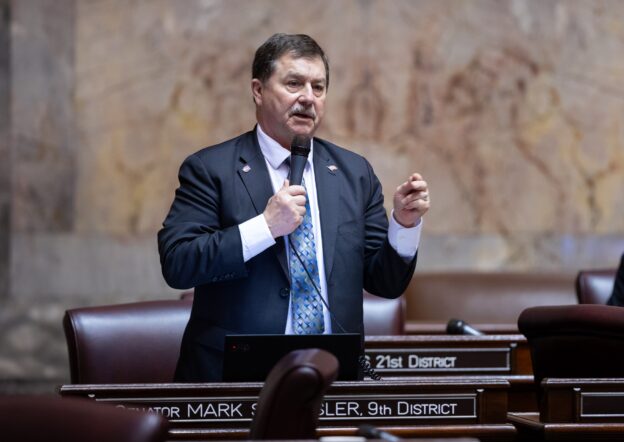
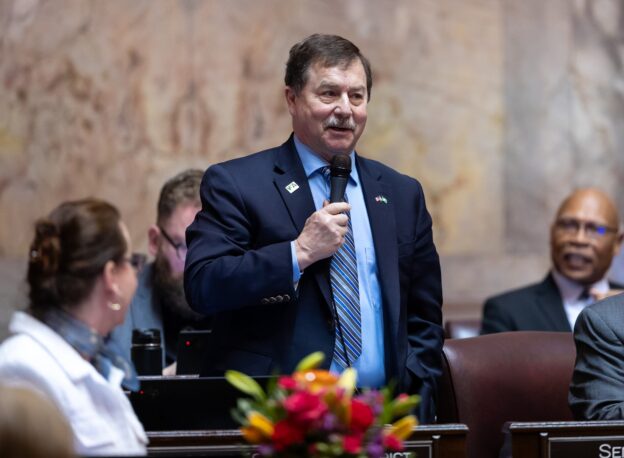
“This capital budget passed by the Legislature is truly a bipartisan package that takes a statewide approach in addressing needs,” said 9th District Sen. Mark Schoesler, R-Ritzville, the lead Republican for the Senate capital budget. “This budget does a very good job for several areas, from K-12 and higher education to water infrastructure, agriculture, housing and flood response.”

“I’m pleased that this budget provides strong funding for water-infrastructure projects on both sides of Washington. The House capital budget had no water projects, so it’s good that we preserved the water projects that were in the Senate capital budget. The final capital budget also funds many small-school modernization projects throughout our state. During negotiations with the House, we insisted on these small-school projects in the budget,” added Schoesler, who commended the Senate capital budget team on developing a solid and prudent budget, especially his Democratic counterpart, Sen. Yasmin Trudeau, D-Tacoma.

“This budget is an example of making a good thing better. It builds on the very solid capital budget approved in 2025 by accommodating the unforeseen needs that we knew would emerge in the months since then,” said 16th District Sen. Perry Dozier, who is in his second year as assistant Republican leader on the capital budget. “As our bipartisan Senate team negotiated this final version with the House, we held firm to our positions on critical areas like water infrastructure and support for small school districts – and to me that had a lot to do with the unanimous vote in the Senate today.

“Although people understandably think of construction when it comes to the capital budget, the natural-resources part is also important. That’s where the water projects come in, and this year I’m very pleased that the House agreed with allocating $3.2 million toward the problem of waste tires. Being able to respond to community needs like dealing with that massive tire pile outside Richland is why working on this budget is one of the most uplifting things I get to do as a lawmaker,” added Dozier, R-Waitsburg.

The supplemental capital budget (Senate Bill 6003) totals $889 million. It follows up the $7.5 billion 2025-27 state capital budget enacted last year. The new budget addresses a wide range of needs throughout Washington, with funding for projects related to K-12 and higher education, water infrastructure, flood responses, housing and clean energy.

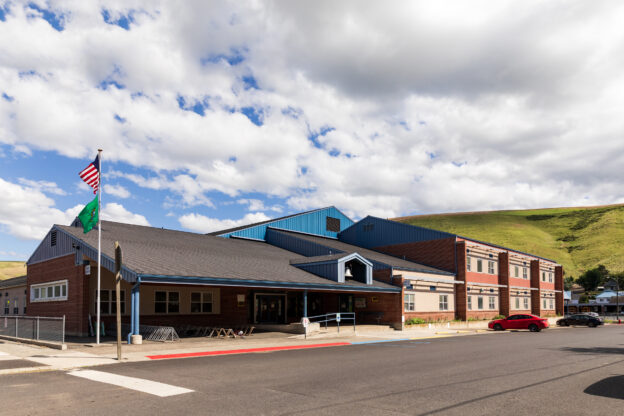
The revised capital budget provides over $71 million for the Small District and State-Tribal Education Compact (STEC) Schools Modernization Program. The budget also includes:

  • $21.2 million for the school construction assistance program (SCAP).
  • $13.9 million in new spending for school seismic safety grants.
  • $5.4 million for projects for distressed schools.
  • $3.78 million for a SCAP enhancement program pilot project.
  • $2.5 million for Healthy Kids-Healthy Schools to fund grants to support lead remediation.
  • $430,000 for school seismic-safety site class assessments.

Four-year universities and other higher-education institutions benefit from the capital budget. Several Washington State University projects receive funding:

  • Preserving and improving campus facilities ($6 million).
  • Cooling and electrical upgrades to Ensminger Pavilion ($1.5 million).
  • Spokane Team Health Education Building renovation ($7 million).
  • WSU Creamery lighting and equipment replacement ($1 million).
  • Virtual fencing grants to enhance climate resiliency ($500,000).

Central Washington University receives money for its electrical feeder line to support the growth of campus and geothermal energy. Capital budget funding goes to Eastern Washington University for projects to preserve and improve campus facilities, as well as to Western Washington University for preventative maintenance for building-system repairs and for projects to preserve and improve campus facilities.

In addition, several campuses in the state’s community and technical college system receive funding for projects, including:

  • Cascadia College – CC5 Gateway Building.
  • Lower Columbia College – David Story Field improvements.
  • Spokane Community College – renovation of the east wing of its Main Building.

Schoesler and Dozier, both farmers, noted the updated capital budget funds agricultural projects, including:

  • $10 million for cost-share agreements with dairy-farm owners for anaerobic digester development and maintenance projects.
  • $4.6 million for grants to farmers to buy climate-smart agricultural equipment to reduce on-farm carbon emissions and increase carbon sequestration.
  • $2.2 million for the design of a new Washington State Department of Agriculture Plant Services Lab at Washington State University’s Prosser campus.
  • $400,000 for WSU’s soil health research infrastructure, specifically its long-term agroecological research and extension sites (LTARE).

The supplemental capital budget funds water-infrastructure projects on both sides of the Cascades. Those appropriations include $8.977 million for several water-conservation projects across the state, including:

  • Kennewick Irrigation District main canal lining.
  • Kittitas Reclamation District South.
  • Mill Creek passage, Walla Walla – 3rd to Colville.
  • Roza Canal floor replacement.
  • Roza Canal sealing project.
  • Touchet River mile 42.
  • Waynita Creek restoration.
  • Water system efficiency leak detection and repairs.

About $16.1 million is allocated for many local water-infrastructure projects in both western and eastern Washington, including the Chehalis River irrigation project, Othello water supply, Scatter Creek irrigation and pipeline projects, Skagit District 15 irrigation project and Skookumchuck River irrigation fish screen and water conservation projects.

The supplemental capital budget provides funding for disaster and response to the December 2025 floods, including:

  • $3.1 million for grants to counties for the removal of debris in rivers and other waterways.
  • $2 million for grants to six counties (King, Lewis, Pierce, Skagit, Snohomish and Whatcom) to evaluate the counties’ risks and needs for flood response, preparedness and prevention.

The capital budget provides money for law-enforcement projects, including:

  • Over $1 million for Pasco Regional Police Academy improvements.
  • $350,000 for the Washington State Criminal Justice Training Commission’s Burien Campus indoor shooting range.
  • $252,000 for the Criminal Justice Training Commission’s ADA upgrades at the Burien Campus.

The natural resources section of the updated capital budget includes:

  • $3.5 million for small, family-forest landowners to replace and remove stream-crossing structures, such as culverts, to improve fish passage for salmon, trout and other fish.
  • $3.2 million to address tire-pile prevention and cleanup, including removing the Twin Bridges Road tire-pile site near Richland.
  • $630,000 for a new welcome center and stormwater drainage improvements at Millersylvania State Park.

The supplemental capital budget spends $200 million for housing and homelessness, with $123.3 million allocated from the Housing Trust Fund for housing projects in both western and eastern Washington.

Over $30 million in funding is provided for about 120 new local and community projects.

The 2026 legislative session is scheduled to end tonight.

 

Legislature approves two-year capital budget ‘for the entire state’

On the final day of its 2025 session, the Legislature approved the 2025-27 state capital budget, with the two Senate Republicans who helped develop this budget praising it for addressing needs throughout Washington.

“I’m pleased that the capital budget passed by the Legislature addresses many needs throughout the state,” said 9th District Sen. Mark Schoesler, R-Ritzville, the lead Republican for the Senate capital budget. “Realizing there were limited resources to pay for the capital budget, we made tough decisions every step of the way, working on priorities that satisfied both our side and the Democrats.

“I’m also pleased this budget leaves healthier reserves than is often the case going into the second year of a biennium. That’s important for addressing unforeseen problems next year.”

“The Republicans and Democrats on the Senate capital-budget team are on the same page – but our House counterparts have their own priorities, so there was a fair amount of pushing and pulling to get to a final product,” said Sen. Perry Dozier, R-Waitsburg, assistant Republican leader for the capital budget.

“I’m proud of how we held firm on the things the Senate views as most important, which include investments that will be seen in all four corners of the state. Education and behavioral health are priorities in rural Washington as much as anywhere in our state, and that is reflected here. It’s a solid budget, and deserving of the strong bipartisan support it received today.”

The new two-year state capital budget has a total price tag of $7.6 billion, with an ending-fund balance of $349 million. The Senate passed the capital budget 47-0 and the House approved it 98-0. It now goes to Gov. Bob Ferguson for his consideration.

It includes $975 million for K-12 education and early-learning projects, including $430 million for the School Construction Assistance Program. There is $202 million for Small District and Tribal School Modernization construction and planning grants, which will fund 40 additional small-school construction projects.

Another $151 million is provided for additional school seismic-safety grants, plus $6 million for the new school security and preparedness infrastructure grants program. The budget includes $5.15 million for CASE/Ag Science in Schools grants.

The capital budget spends $781 million on numerous housing programs.

Schoesler and Dozier, both farmers, noted the state’s fairs benefit from this budget, which allocates a record-high $9 million for competitive grants to agricultural fairs for health- and safety-improvement projects.

The new capital budget also provides plenty of money for water-related needs on both sides of the Cascades, with robust funding for eastern Washington water-infrastructure programs. Those appropriations include $69 million for the Columbia River Water Supply Development Program, of which $44 million goes to the Odessa Groundwater Replacement Program, plus $52 million for the Yakima River Basin Water Supply Program and $8.5 million for the Yakima-Tieton Canal to start fixing damage to a wildfire.

In western Washington, $75 million is provided to fully fund the Chehalis River Basin Strategy, which includes flood control and salmon recovery.

The budget includes a record $75 million for 13 fish hatcheries statewide.

A total of $1.2 billion is allocated for projects at Washington’s four-year universities and other higher-education institutions. They include:

  • Washington State University: $25 million for the Sciences Building, plus money for preventive facility maintenance and building-system repairs.
  • Central Washington University: $12 million for the emergency backup power system, $11 million for the university’s Humanities and Social Science Complex, and $10 million for an expansion of CWU’s aviation-degree program.
  • Eastern Washington University: $10 million for the dental-therapy lab, as well as funding for facility-preservation projects.
  • The state’s community and technical college system receives $434 million for various projects.

9th District legislators to host virtual town hall on Thursday, March 20

Sen. Mark Schoesler, Rep. Joe Schmick and Rep. Mary Dye are inviting citizens to join them Thursday, March 20 for a 9th District virtual town hall meeting.

The eastern Washington lawmakers will provide an update of the 2025 legislative session and then take questions from participants. Citizens may also submit written questions during the process of registering to participate in the meeting.

During the town hall meeting, the 9th District legislative team will discuss several issues, including:

  • The upcoming two-year state operating, capital and transportation budgets.
  • The likelihood that majority Democrats will impose new and/or higher taxes on Washingtonians.
  • Efforts by Democrats to pass anti-gun legislation.
  • Bills impacting K-12 education and higher education.
  • Bills affecting agriculture in Washington.

The event will be held from 7 p.m. to 8 p.m. and conducted using the Zoom platform. Preregistration is required by going to https://tinyurl.com/9thTownHall2025. Those registering will receive a confirmation email with instructions for joining the meeting.

Schoesler votes ‘no’ on Democrats’ bill to dismantle parental-rights initiative

State Sen. Mark Schoesler, R-Ritzville, and other Senate Republicans voted against a bill introduced by Senate Democrats that would eliminate important rights from the parental-rights law approved by the Legislature last year.

Senate Bill 5181 was passed today along party lines, 30-19.

“This bill is a slap in the face of the 454,000 Washingtonians who signed the petition sheets allowing the parental rights initiative to be sent to the Legislature last year,” said Schoesler, who serves the 9th Legislative District.

“Initiative 2081 was passed unanimously by the Senate a year ago, but now my Democratic counterparts want to take a legislative chisel to it and remove parts of it that parents supported most. At a time when parents’ trust in Washington’s public-school system is lower than ever, we should not pass a bill that weakens the parental-rights initiative. But that’s what the Senate majority did today.”

SB 5181 would end or hinder parents’ access to important school-related medical information, including:

  • Prior notification when medical services are offered (except in emergencies).
  • Notification when medical services or medication could impact health insurance.
  • Notification when school-arranged medical treatment results in follow-up care.

It also contains an “emergency clause” that would eliminate the constitutional right of voters to challenge the bill through a referendum. Democrats rejected a Republican amendment to remove the language from the bill.

“There’s no emergency here, so including an emergency clause has no purpose other than to prevent citizens from pushing back through the referendum process. If Democrats are afraid to find out what the voters think of the changes this bill makes, they should have left the law alone.”

SB 5181 now goes to the House of Representatives for further consideration.

Schoesler supports supplemental capital budget passed by Legislature

State Sen. Mark Schoesler applauded the final version of the state supplemental capital budget unanimously approved by the Legislature March 6, just before lawmakers adjourned for the year.

“While this compromise version of the supplemental capital budget is not as strong in some areas as the version developed and approved by the Senate earlier in the session, it is still a good capital budget that will help communities across Washington, and address many important needs,” said Schoesler, who is the lead Republican capital budget writer in the Senate.

As was the case with the Senate version, the final capital budget funds many projects located in the 9th District, noted Schoesler, R-Ritzville.

Several 9th District school districts receive funding through the small district and tribal compact schools modernization program, including $5.245 million for a school repair project in the Asotin-Anatone School District. Other school districts receiving funding include Creston, Freeman, LaCrosse, Palouse, Pomeroy, Steptoe and Wilbur.

Washington State University’s main campus in Pullman receives $10 million for a new digester at the Knott Dairy Center, maker of Cougar Gold cheese, and $3 million for its campus energy program.

Eastern Washington University in Cheney receives nearly $10 million for energy improvements to its sports and recreation center.

Other local projects in the 9th District that are funded by the supplemental capital budget include:

  • Tristate Health Hospital in Clarkston ($1 million).
  • Tekoa Parks and Recreation ($200,000)
  • Davenport Senior Center capital improvements ($120,000)
  • Latah water system rehabilitation project ($187,000)
  • Regional Theatre of the Palouse (Pullman) preservation and maintenance ($77,000)

There also is $250,000 for a portion of the Odessa Pipeline project located in the 9th District.

The final capital budget funds several projects that are located near the 9th District:

  • $46 million for the Tri-Tech Skills Center in Kennewick.
  • $5.5 million for the Odessa Ground Water Replacement Program.
  • $3.5 million in toxic cleanup funding for homes affected by the Grays Road and Oregon wildfires in Spokane County last August, plus another $975,000 for the Spokane Conservation District to implement wildfire recovery efforts.

“The Odessa ground water project and the wildfire recovery projects were initiated in the Senate this year and the Senate insisted that these projects stay in the final capital budget. I’m pleased that we succeeded in keeping these projects in the budget,” said Schoesler.

The 2024 legislative session ended March 7.

Governor signs Schoesler bill helping school districts address maintenance needs

A bill introduced this year by 9th District Sen. Mark Schoesler that aims to help school districts in Washington address their building-maintenance needs was signed today by Gov. Jay Inslee.

The law created by Senate Bill 5403 will allow school districts to create a “depreciation subfund” that can receive a transfer of up to 2% of a school district’s general fund each fiscal year.

“After introducing it the past three years, it’s good to see this bill finally become law,” said Schoesler, R-Ritzville. “It provides another way for school districts to handle building- or facility-maintenance needs. Sometimes it can be better for a school district to pay cash for a building repair or to set aside money for emergencies when they arise. Establishing this subfund, which is voluntary, is a way to help students learn in a healthy environment since school buildings will be in better condition.”

After passing SB 5403 unanimously in March, the Senate voted late in the regular session to unanimously support the version approved by the House, which makes the subfund option available only to school districts with fewer than 2,000 students.

During the 2021 and 2022 legislative sessions, the Senate twice easily passed an earlier version of Schoesler’s bill. Senate Bill 5202 reached the House Rules Committee and was placed on the House voting calendar in both sessions before stalling.

Schoesler praises state capital budget passed by Legislature

State Sen. Mark Schoesler, the Senate Republican leader on the capital budget, issued this statement after the Legislature passed a new state capital budget for 2023-25. It funds the construction and maintenance of state buildings, public-school matching grants, higher-education facilities, public lands, parks, water infrastructure and other assets.

“This is a win for the people of Washington. It is truly a statewide budget that lives within our means and funds the priorities of government.   

“This capital budget responds to needs all throughout our state and provides funding for important projects in a wide variety of categories, from affordable housing to K-12 and higher education, from water supply and water quality needs to salmon recovery, state parks and outdoor recreation.

“I’m pleased by the support for the many projects that will help our colleges and universities, and especially glad to see money for school seismic-safety grants, since Washington is in earthquake country. The funding for water-supply projects, which benefits agriculture and other water users, is a big plus as well.

“Our capital budget takes a statewide approach, as it should. It will benefit many communities throughout Washington.”

Overall, the state capital budget (Senate Bill 5200) appropriates a total of $9 billion in spending, including nearly $694 million for affordable-housing projects; $872 million for K-12 education projects; $1.5 billion in total funding for higher education; $884 million to address behavioral-health needs; and $2.4 billion for natural-resource projects that address water quality and supply, salmon recovery, outdoor recreation and conservation, state parks, state trust lands and more.

The Senate passed the capital budget 48-0 today after the House approved it 96-0 on Friday. It now goes to Gov. Jay Inslee for his consideration.

Schoesler, R-Ritzville, serves the 9th Legislative District.

The 2023 legislative session is scheduled to end tomorrow.

Legislature OKs Schoesler bill to help school districts address maintenance needs

A bill introduced by 9th District Sen. Mark Schoesler that aims to help school districts in Washington address their building-maintenance needs is heading to the governor’s desk after being passed by the Legislature.

Senate Bill 5403 would allow school districts to create a “depreciation subfund” that can receive a transfer of up to 2% of a school district’s general fund each fiscal year.

“It’s good to see this bill finally get through the Legislature,” said Schoesler, R-Ritzville. “It provides another way for school districts to handle building- or facility-maintenance needs. Sometimes it can be better for a school district to pay cash for a building repair or to set aside money for emergencies when they arise. Establishing this subfund, which is voluntary, is a way to help students learn in a healthy environment since school buildings would be in better condition.”

The Senate unanimously passed SB 5403 in March. After the House added a floor amendment and then approved the altered proposal on an 89-8 vote on April 12, the Senate today voted 48-0 to concur (or agree) with the House’s amended version. The House floor amendment would make the bill applicable only to school districts with fewer than 2,000 students.

During the 2021 and 2022 legislative sessions, the Senate twice easily passed an earlier version of Schoesler’s bill. Senate Bill 5202 reached the House Rules Committee and was placed on the House voting calendar in both sessions before stalling.