


Tag Archives: Sen. Perry Dozier

Legislature unanimously approves supplemental capital budget

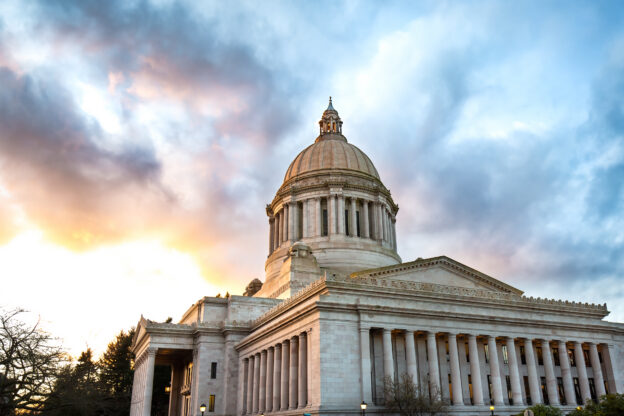
The Legislature tonight unanimously passed the 2025-27 state supplemental capital budget  following an agreement earlier this week by Senate and House negotiators on a final budget plan.  The Senate voted 49-0 to pass the budget after the House approved it 96-0.

Two eastern Washington Republican senators who helped develop the spending plan applauded it for addressing needs on both sides of the Cascades.

“This capital budget passed by the Legislature is truly a bipartisan package that takes a statewide approach in addressing needs,” said 9th District Sen. Mark Schoesler, R-Ritzville, the lead Republican for the Senate capital budget. “This budget does a very good job for several areas, from K-12 and higher education to water infrastructure, agriculture, housing and flood response.”

“I’m pleased that this budget provides strong funding for water-infrastructure projects on both sides of Washington. The House capital budget had no water projects, so it’s good that we preserved the water projects that were in the Senate capital budget. The final capital budget also funds many small-school modernization projects throughout our state. During negotiations with the House, we insisted on these small-school projects in the budget,” added Schoesler, who commended the Senate capital budget team on developing a solid and prudent budget, especially his Democratic counterpart, Sen. Yasmin Trudeau, D-Tacoma.

“This budget is an example of making a good thing better. It builds on the very solid capital budget approved in 2025 by accommodating the unforeseen needs that we knew would emerge in the months since then,” said 16th District Sen. Perry Dozier, who is in his second year as assistant Republican leader on the capital budget. “As our bipartisan Senate team negotiated this final version with the House, we held firm to our positions on critical areas like water infrastructure and support for small school districts – and to me that had a lot to do with the unanimous vote in the Senate today.

“Although people understandably think of construction when it comes to the capital budget, the natural-resources part is also important. That’s where the water projects come in, and this year I’m very pleased that the House agreed with allocating $3.2 million toward the problem of waste tires. Being able to respond to community needs like dealing with that massive tire pile outside Richland is why working on this budget is one of the most uplifting things I get to do as a lawmaker,” added Dozier, R-Waitsburg.

The supplemental capital budget (Senate Bill 6003) totals $889 million. It follows up the $7.5 billion 2025-27 state capital budget enacted last year. The new budget addresses a wide range of needs throughout Washington, with funding for projects related to K-12 and higher education, water infrastructure, flood responses, housing and clean energy.

The revised capital budget provides over $71 million for the Small District and State-Tribal Education Compact (STEC) Schools Modernization Program. The budget also includes:

  • $21.2 million for the school construction assistance program (SCAP).
  • $13.9 million in new spending for school seismic safety grants.
  • $5.4 million for projects for distressed schools.
  • $3.78 million for a SCAP enhancement program pilot project.
  • $2.5 million for Healthy Kids-Healthy Schools to fund grants to support lead remediation.
  • $430,000 for school seismic-safety site class assessments.

Four-year universities and other higher-education institutions benefit from the capital budget. Several Washington State University projects receive funding:

  • Preserving and improving campus facilities ($6 million).
  • Cooling and electrical upgrades to Ensminger Pavilion ($1.5 million).
  • Spokane Team Health Education Building renovation ($7 million).
  • WSU Creamery lighting and equipment replacement ($1 million).
  • Virtual fencing grants to enhance climate resiliency ($500,000).

Central Washington University receives money for its electrical feeder line to support the growth of campus and geothermal energy. Capital budget funding goes to Eastern Washington University for projects to preserve and improve campus facilities, as well as to Western Washington University for preventative maintenance for building-system repairs and for projects to preserve and improve campus facilities.

In addition, several campuses in the state’s community and technical college system receive funding for projects, including:

  • Cascadia College – CC5 Gateway Building.
  • Lower Columbia College – David Story Field improvements.
  • Spokane Community College – renovation of the east wing of its Main Building.

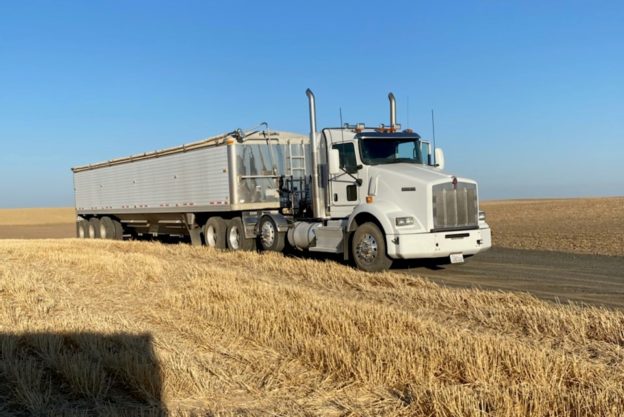
Schoesler and Dozier, both farmers, noted the updated capital budget funds agricultural projects, including:

  • $10 million for cost-share agreements with dairy-farm owners for anaerobic digester development and maintenance projects.
  • $4.6 million for grants to farmers to buy climate-smart agricultural equipment to reduce on-farm carbon emissions and increase carbon sequestration.
  • $2.2 million for the design of a new Washington State Department of Agriculture Plant Services Lab at Washington State University’s Prosser campus.
  • $400,000 for WSU’s soil health research infrastructure, specifically its long-term agroecological research and extension sites (LTARE).

The supplemental capital budget funds water-infrastructure projects on both sides of the Cascades. Those appropriations include $8.977 million for several water-conservation projects across the state, including:

  • Kennewick Irrigation District main canal lining.
  • Kittitas Reclamation District South.
  • Mill Creek passage, Walla Walla – 3rd to Colville.
  • Roza Canal floor replacement.
  • Roza Canal sealing project.
  • Touchet River mile 42.
  • Waynita Creek restoration.
  • Water system efficiency leak detection and repairs.

About $16.1 million is allocated for many local water-infrastructure projects in both western and eastern Washington, including the Chehalis River irrigation project, Othello water supply, Scatter Creek irrigation and pipeline projects, Skagit District 15 irrigation project and Skookumchuck River irrigation fish screen and water conservation projects.

The supplemental capital budget provides funding for disaster and response to the December 2025 floods, including:

  • $3.1 million for grants to counties for the removal of debris in rivers and other waterways.
  • $2 million for grants to six counties (King, Lewis, Pierce, Skagit, Snohomish and Whatcom) to evaluate the counties’ risks and needs for flood response, preparedness and prevention.

The capital budget provides money for law-enforcement projects, including:

  • Over $1 million for Pasco Regional Police Academy improvements.
  • $350,000 for the Washington State Criminal Justice Training Commission’s Burien Campus indoor shooting range.
  • $252,000 for the Criminal Justice Training Commission’s ADA upgrades at the Burien Campus.

The natural resources section of the updated capital budget includes:

  • $3.5 million for small, family-forest landowners to replace and remove stream-crossing structures, such as culverts, to improve fish passage for salmon, trout and other fish.
  • $3.2 million to address tire-pile prevention and cleanup, including removing the Twin Bridges Road tire-pile site near Richland.
  • $630,000 for a new welcome center and stormwater drainage improvements at Millersylvania State Park.

The supplemental capital budget spends $200 million for housing and homelessness, with $123.3 million allocated from the Housing Trust Fund for housing projects in both western and eastern Washington.

Over $30 million in funding is provided for about 120 new local and community projects.

The 2026 legislative session is scheduled to end tonight.


Senate unanimously approves supplemental capital budget

The Senate today unanimously passed its version of the 2025-27 state supplemental capital budget. Republicans who helped develop the spending plan applauded it for addressing needs across Washington.

“Our supplemental budget complements the two-year capital budget enacted by the Legislature last year by spending money in a responsible manner while addressing important needs throughout the entire state,” said 9th District Sen. Mark Schoesler, R-Ritzville, the lead Republican for the Senate capital budget. “Working with our Democrat counterparts, we identified priorities and worked together to create a budget that is both effective and prudent. Our budget does a very good job for several areas, from K-12 and higher education to water infrastructure, housing and flood response.”

Schoesler’s floor speech on the capital budget prior to the Senate’s vote may be viewed here.

“I’m pleased with how this will get the most from the available dollars and make sure priorities are being addressed,” said 16th District Sen. Perry Dozier, R-Waitsburg, who is in his second year on the capital-budget team and has a solid budgeting background from eight years as a Walla Walla County commissioner.

“The conservative approach we took in budgeting a year ago gave us more flexibility when it came to doing good things now. The item I’m happiest about is the funding to deal with the Richland tire pile – it’s also in the House capital budget so I’m feeling positive about getting that cleanup going. Some of the other standouts in what we passed today include the added support for construction projects at small schools around our state, and a long list of water improvements, many of which are on our side of the Cascades. And like last year, I’m grateful to be a part of this team, for the bipartisanship that produced this budget, and the unanimous support it received today.”

The Senate supplemental capital budget (Senate Bill 6003) totals $723 million. It follows up the $7.5 billion 2025-27 state capital budget enacted last year. The new budget addresses a wide range of needs throughout Washington, with funding for projects related to K-12 and higher education, water infrastructure, flood responses, housing and clean energy.

The Senate capital budget provides over $71 million for the Small District and State-Tribal Education Compact Schools (STEC) Modernization Program. The budget also includes $3.7 million for projects for distressed schools, $5 million in new spending for school seismic-safety grants, $1.5 million for Healthy Kids-Healthy Schools to fund grants to support lead remediation and $430,000 for school seismic-safety site class assessments.

Several four-year universities and other higher-education institutions benefit from the capital budget. Several Washington State University projects receive funding:

  • Preserving and improving campus facilities.
  • Cooling and electrical upgrades to Ensminger Pavilion.
  • Spokane Team Health Education Building renovation.
  • WSU Creamery lighting and equipment replacement.

Central Washington University receives money for its electrical feeder line to support the growth of campus and geothermal energy. Capital budget funding goes to Eastern Washington University for projects to preserve and improve campus facilities, as well as to Western Washington University for preventative maintenance for building-system repairs and for projects to preserve and improve campus facilities.

In addition, several campuses in the state’s community and technical college system receive funding for projects, including:

  • Cascadia College – CC5 Gateway Building.
  • Lower Columbia College – David Story Field improvements.
  • Spokane Community College – renovation of the east wing of its Main Building.

Schoesler and Dozier, both farmers, noted the Senate capital budget funds agricultural projects, including:

  • $10 million for cost-share agreements with dairy-farm owners for anaerobic digester development and maintenance projects.
  • $4.6 million for grants to farmers to buy climate-smart agricultural equipment to reduce on-farm carbon emissions and increase carbon sequestration.
  • $2.2 million for the design of a new Washington State Department of Agriculture Plant Services Lab at Washington State University’s Prosser campus.
  • $400,000 for WSU’s soil health research infrastructure, specifically its long-term agroecological research and extension sites (LTARE).

The Senate supplemental capital budget funds water-infrastructure projects on both sides of the Cascades. Those appropriations include $12.2 million for several water-conservation projects across the state, including:

  • Kennewick Irrigation District main canal lining.
  • Kittitas Reclamation District South.
  • Mill Creek passage, Walla Walla – 3rd to Colville.
  • Roza Canal floor replacement.
  • Roza Canal sealing project.
  • Touchet River mile 42.
  • Waynita Creek restoration.

A total of $7.9 million is allocated for many local water-infrastructure projects in both western and eastern Washington, including the Chehalis River irrigation project, Othello water supply, Scatter Creek irrigation and pipeline projects, Skagit District 15 irrigation project and Skookumchuck River irrigation fish screen and water conservation projects.

More than $25 million is provided in the Senate capital budget for response to the December 2025 floods, including:

  • $8.6 million for recovery support, including rental assistance and home repair and replacement for individuals recovering from the floods.
  • $3.945 million for grants to counties for the removal of debris in rivers and other waterways.
  • $2 million for grants to six counties (King, Lewis, Pierce, Skagit, Snohomish and Whatcom) to evaluate the counties’ risks and needs for flood response, preparedness and prevention.

The Senate capital budget provides money for law-enforcement projects, including:

  • Over $1 million for Pasco Regional Police Academy improvements.
  • $350,000 for the Washington State Criminal Justice Training Commission’s Burien Campus indoor shooting range.
  • $252,000 for the Criminal Justice Training Commission’s ADA upgrades at the Burien Campus.

The natural resources section of the Senate’s supplemental capital budget includes:

  • $4.2 million for small, family-forest landowners to replace and remove stream-crossing structures, such as culverts, to improve fish passage for salmon, trout and other fish.
  • $3.2 million to address tire-pile prevention and cleanup, including removing the Twin Bridges Road tire-pile site near Richland.
  • $630,000 for a new welcome center and stormwater drainage improvements at Millersylvania State Park.

The Senate supplemental capital budget spends $150 million for housing and homelessness, with $128.3 million allocated from the Housing Trust Fund for housing projects in both western and eastern Washington.

Once the House of Representatives passes its capital budget, budget writers from the Senate and House are expected to meet as a “conference committee” to develop a compromise budget for both chambers to consider.

The 2026 legislative session is scheduled to end March 12.

Legislature approves two-year capital budget ‘for the entire state’

On the final day of its 2025 session, the Legislature approved the 2025-27 state capital budget, with the two Senate Republicans who helped develop this budget praising it for addressing needs throughout Washington.

“I’m pleased that the capital budget passed by the Legislature addresses many needs throughout the state,” said 9th District Sen. Mark Schoesler, R-Ritzville, the lead Republican for the Senate capital budget. “Realizing there were limited resources to pay for the capital budget, we made tough decisions every step of the way, working on priorities that satisfied both our side and the Democrats.

“I’m also pleased this budget leaves healthier reserves than is often the case going into the second year of a biennium. That’s important for addressing unforeseen problems next year.”

“The Republicans and Democrats on the Senate capital-budget team are on the same page – but our House counterparts have their own priorities, so there was a fair amount of pushing and pulling to get to a final product,” said Sen. Perry Dozier, R-Waitsburg, assistant Republican leader for the capital budget.

“I’m proud of how we held firm on the things the Senate views as most important, which include investments that will be seen in all four corners of the state. Education and behavioral health are priorities in rural Washington as much as anywhere in our state, and that is reflected here. It’s a solid budget, and deserving of the strong bipartisan support it received today.”

The new two-year state capital budget has a total price tag of $7.6 billion, with an ending-fund balance of $349 million. The Senate passed the capital budget 47-0 and the House approved it 98-0. It now goes to Gov. Bob Ferguson for his consideration.

It includes $975 million for K-12 education and early-learning projects, including $430 million for the School Construction Assistance Program. There is $202 million for Small District and Tribal School Modernization construction and planning grants, which will fund 40 additional small-school construction projects.

Another $151 million is provided for additional school seismic-safety grants, plus $6 million for the new school security and preparedness infrastructure grants program. The budget includes $5.15 million for CASE/Ag Science in Schools grants.

The capital budget spends $781 million on numerous housing programs.

Schoesler and Dozier, both farmers, noted the state’s fairs benefit from this budget, which allocates a record-high $9 million for competitive grants to agricultural fairs for health- and safety-improvement projects.

The new capital budget also provides plenty of money for water-related needs on both sides of the Cascades, with robust funding for eastern Washington water-infrastructure programs. Those appropriations include $69 million for the Columbia River Water Supply Development Program, of which $44 million goes to the Odessa Groundwater Replacement Program, plus $52 million for the Yakima River Basin Water Supply Program and $8.5 million for the Yakima-Tieton Canal to start fixing damage to a wildfire.

In western Washington, $75 million is provided to fully fund the Chehalis River Basin Strategy, which includes flood control and salmon recovery.

The budget includes a record $75 million for 13 fish hatcheries statewide.

A total of $1.2 billion is allocated for projects at Washington’s four-year universities and other higher-education institutions. They include:

  • Washington State University: $25 million for the Sciences Building, plus money for preventive facility maintenance and building-system repairs.
  • Central Washington University: $12 million for the emergency backup power system, $11 million for the university’s Humanities and Social Science Complex, and $10 million for an expansion of CWU’s aviation-degree program.
  • Eastern Washington University: $10 million for the dental-therapy lab, as well as funding for facility-preservation projects.
  • The state’s community and technical college system receives $434 million for various projects.

Senate unanimously approves capital budget ‘for the entire state’

The Senate today unanimously approved its version of the 2025-27 state capital budget, with the Republicans who helped develop the spending plan praising it for addressing needs throughout Washington.

“What we have is a capital budget for the entire state,” said 9th District Sen. Mark Schoesler, R-Ritzville, the lead Republican for the Senate capital budget. “We looked at this budget and saw fewer resources, so we made tougher decisions every step of the way, working on priorities that made both our side and our Democrat counterparts happy.

“This budget also leaves healthier reserves than we often have going into the second year of a biennium. When we come back next year, we can address unforeseen problems with those reserves.”

Schoesler’s full remarks prior to today’s vote may be viewed here.

“I’m really pleased with how well the Senate capital budget addresses needs throughout Washington,” said Sen. Perry Dozier, R-Waitsburg. He became assistant Republican leader on the capital-budget team this year, bringing government-budgeting experience from two terms as a Walla Walla County commissioner.

“We all made sure there is a lot of support for K-12 education, which is our state’s paramount duty, but this particular budget is also good for things like water projects, housing and fish hatcheries. That makes sense, if you look at the mix of backgrounds and priorities of the four senators who crafted it. I’m also glad we made progress on addressing some long-standing concerns about support for public-works projects.

“The capital budget has a reputation for being the most bipartisan of the three state budgets, and now I know why. We placed a lot of trust in one another in the course of developing this – each of us tried to be responsive to what the others brought to the table. That shows through in the budget itself and today’s unanimous vote.”

The Senate capital budget has a total price tag of $7.3 billion, with an ending-fund balance of $222 million.

It features $1 billion for K-12 education and early-learning projects, including $563 million for the School Construction Assistance Program. There is $201 million for Small District and Tribal School Modernization construction and planning grants, which will fund 40 additional small-school construction projects. Another $143 million is provided for additional school seismic-safety grants, plus $12 million for the new school security and preparedness infrastructure grants program.

The Senate capital budget spends $770 million on a variety of housing programs.

Schoesler and Dozier, both farmers, noted the state’s fairs benefit from this budget, which allocates a record $12 million for competitive grants to agricultural fairs for access- and safety-improvement projects.

The Senate capital budget also provides plenty of money for water-related needs on both sides of the Cascades, with robust funding for eastern Washington water-infrastructure programs. Those appropriations include $69 million for the Columbia River Water Supply Development Program, of which $44 million goes to the Odessa Groundwater Replacement Program, plus $53 million for the Yakima River Basin Water Supply Program and $13 million for the Yakima-Tieton Canal to start fixing damage to a wildfire.

In western Washington, $80 million is provided to fully fund the Chehalis River Basin Strategy, which includes flood control and salmon recovery.

There is also $85 million in the two-year plan for 15 fish hatcheries statewide – another record.

A total of $1.2 billion is allocated for projects at Washington’s four-year universities and other higher-education institutions. They include:

  • University of Washington: $40.8 million for Anderson Hall renovation.
  • Washington State University: $25 million for the Sciences Building, plus money for preventive facility maintenance and building-system repairs.
  • Central Washington University: $12 million for the emergency backup power system, $11 million for the university’s Humanities and Social Science Complex, and $10 million for an expansion of CWU’s aviation-degree program.
  • Eastern Washington University: $10 million for the dental-therapy lab, as well as funding for facility-preservation projects.
  • The state’s community and technical college system receives $400 million for various projects.

Once the House of Representatives passes its capital budget, budget writers from the Senate and House will meet as a “conference committee” to hammer out a compromise capital budget for both chambers to consider.

The 2025 legislative session is scheduled to end April 27.

Republican senators sponsor bill to ensure farmers, other exempt-fuel users receive exemption from Climate Commitment Act

When the Climate Commitment Act was passed by majority Democrats in 2021, creating a “cap-and-tax” program for greenhouse gas emissions that is expected to significantly raise fuel prices, the measure included an exemption for farmers and other groups from paying the surcharge created by the program.

But since the law was implemented by the state Department of Ecology on Jan. 1 of this year, the expected exemption for farm diesel and fuel used by the maritime industry has not taken effect, angering farmers and others who expect to benefit from it.

A pair of eastern Washington Republican senators is sponsoring a bill that aims to fix the problem.

Senate Bill 5728 would develop a process to implement exemptions for farm diesel and other certain fuels under the “cap-and-tax” program. It has been sent to the Senate Environment, Energy and Technology Committee. No public hearing has been scheduled.

“When the Climate Commitment Act was being drafted, we were told famers would receive an exemption and not pay higher fuel taxes. That did not happen,” said the bill’s prime sponsor, 16th District Sen. Perry Dozier, R-Waitsburg. “The Department of Ecology should be responsible for finding a solution to ensure that farmers and the maritime industry are not burdened with the higher fuel costs as a result of the cap-and-tax legislation.”

“After I learned that the farm-fuel exemption had not been implemented, I asked the Department of Ecology why,” said 9th District Sen. Mark Schoesler, R-Ritzville. “DOE officials have blamed “Big Oil” for the lack of an exemption so far. They also say this exemption will be extended this summer, apparently forgetting that farm work goes on well before summer. The exemption on fuel for the agriculture and maritime industries needs to take effect now, not months from now.”

Under the proposal, DOE and the Department of Revenue must create a method to determine the additional amount paid by an end user of exempt fuel, such as a farmer, due to a fuel supplier’s compliance obligation. Compensation to an end user must be paid no later than 14 days after DOE receives an application for reimbursement.